
<div id="prestablogfont"><p><strong>For centuries, baking in a traditional wood-fired oven has brought out the best in flavours and kept an age-old craft alive. <br /></strong></p>

<p><strong>Imagine the irresistible smell of fresh bread </strong><strong>coming out of your traditional bread oven, set up in your garden or outdoor kitchen.</strong></p>

<p>This dream is within reach with a little patience and the right materials.</p>

<p><strong>How do you build a bread oven yourself? </strong></p>

<p><strong>In this article, you will discover how to build your own traditional bread oven </strong>and enjoy wood-fired baking to make delicious homemade bread.</p>

<p>We will guide you step by step through <strong data-start="259" data-end="305">the essential stages of the build</strong>, from choosing the location and design to assembling the refractory materials essential to your oven's performance.</p>

<p>This project, both fun and practical, lets you build a hand-made wood-fired oven suited to your space. Thanks to the heat stored in the firebricks, your oven guarantees even, authentic baking. ✨</p>

<h2>The stages of building a bread oven</h2>

<p>✅ Choose the location and design of your oven in the garden or the house</p>

<p>✅ Prepare the concrete slab for a solid base</p>

<p>✅ Select the firebricks and earth for good thermal mass</p>

<p>✅ Insulate and complete the exterior finish in rustic brick or natural stone</p>

<h2>A made-to-measure bread oven for old-fashioned cooking</h2>

<p><strong>A bread oven is the centrepiece of an old-fashioned kitchen, combining authenticity, conviviality and unrivalled baking performance.</strong></p>

<p>Whether you want a <a href="https://coeurdefoyer.fr/en/150-fours-cle-en-main"><span style="color: #610c11;"><strong>turnkey wood-fired oven</strong></span></a> already assembled, a <a href="https://coeurdefoyer.fr/en/15-fours-en-kit"><span style="color: #610c11;"><strong>ready-to-assemble oven kit</strong></span></a>, or a <span style="color: #610c11;"><strong><a href="https://coeurdefoyer.fr/en/14-fours-en-fonte" style="color: #610c11;">cast iron oven</a></strong></span>, every project can be <strong data-start="297" data-end="339">tailored to your space and your needs</strong>.</p>

<p>As well as adding a rustic, welcoming touch to your outdoor space or kitchen, a made-to-measure oven guarantees <strong>even, flavourful baking of your bread, pizzas and other traditional wood-fired dishes.</strong></p>

<p>With a personalised design and quality materials, you can create an oven that fits perfectly into its surroundings while optimising its thermal performance.</p>

<p><strong data-start="755" data-end="811">Ready to rediscover the pleasure of cooking the old-fashioned way?</strong> ??</p>

<p><a href="https://coeurdefoyer.fr/en/fours-en-kit/1673-four-en-kit-alecook-bunker-70.html" target="_blank" rel="noopener noreferrer" data-abc="true"><img class="ttproduct-img1 lazyload img-fluid unveil-loaded fr-fic fr-dii" src="https://coeurdefoyer.fr/2916-home_default/four-en-kit-alecook-bunker-70.jpg" alt="Alecook Bunker 70 oven kit" data-full-size-image-url="https://coeurdefoyer.fr/2916-large_default/four-en-kit-alecook-bunker-70.jpg" width="250" height="250" style="display: block; margin-left: auto; margin-right: auto;" /></a></p>

<p style="text-align: center;"><a href="https://coeurdefoyer.fr/en/fours-en-kit/1673-four-en-kit-alecook-bunker-70.html" target="_blank" rel="noopener noreferrer" data-abc="true"><span style="color: #610c11;"><strong>Alecook Bunker 70 wood-fired oven kit</strong></span></a></p>

<h3>The Basics of Building a Bread Oven</h3>

<p><strong>Building a bread oven for home use is not a project to be taken lightly.</strong></p>

<p>First of all, you need to find out about the <strong>standards and rules to comply with</strong>. Particularly regarding safety, planning and the environment.</p>

<p>You also need to <strong>allow a sufficient budget</strong> to buy the necessary materials and tools.</p>

<p>You must also set aside a budget to <strong>cover the maintenance</strong> and cleaning of the oven.</p>

<h3>Tools and Materials Needed</h3>

<p><strong>To build a bread oven, you will need a wide range of tools and materials.</strong></p>

<p>Essential building tools include:</p>

<ul>

<li>A wheelbarrow</li>

<li>A shovel</li>

<li>A pickaxe ⛏️</li>

<li>A trowel</li>

<li>A straightedge</li>

<li>A spirit level</li>

<li>A tape measure</li>

<li>A pencil ✏️</li>

<li>A saw</li>

<li>A hammer</li>

<li>Nails</li>

<li>Screws</li>

<li>Wall plugs</li>

<li>Angle brackets</li>

<li>Clamps</li>

<li>Gloves</li>

<li>Safety glasses</li>

<li>A protective mask</li>

</ul>

<p>You will also need <strong>quality materials</strong>, such as:</p>

<ul>

<li>Concrete</li>

<li>Cement</li>

<li>Sand</li>

<li>Gravel</li>

<li>Firebricks</li>

<li>Rock wool</li>

<li>Wood</li>

<li>Metal</li>

<li>Paint</li>

</ul>

<p><strong>Browse our catalogue of <a href="https://coeurdefoyer.fr/en/53-produits-materiaux-refractaires"><span style="color: #610c11;">high-temperature refractory materials and products</span></a></strong></p>

<h2>Choosing the Location and Design of Your Bread Oven</h2>

<p><strong>The location of the bread oven is a key factor in ensuring its performance and appearance.</strong></p>

<p>You need to choose a spot that is at once <strong>practical, safe and in keeping with its surroundings</strong>.</p>

<p>To do this, several criteria must be taken into account. These include the stability of the ground, proximity to the house and protection from the weather.</p>

<p>You must also take into account the <strong>safety distance</strong> from flammable items, ventilation and smoke extraction.</p>

<h3>Defining the Design of Your Bread Oven</h3>

<p><strong>Once the location has been chosen, you need to define the design of your bread oven.</strong></p>

<p>You will need to choose colours and materials that suit the style of your house or garden.</p>

<p>Note that there are many oven models. They differ in size, shape, structure and the way they work. You can take inspiration from existing examples, or create your own design to suit your wishes and needs.</p>

<h3>Determining the Oven's Capacity</h3>

<p><strong>Then, to build a bread oven, you need to determine its capacity.</strong></p>

<p>This depends on the number of loaves you want to bake at a time, and on how often the oven will be used. You should also opt for an oven shape that helps heat circulate and bread bake well.</p>

<p>Round, oval or dome-shaped builds are strongly recommended.</p>

<h3>Prioritising Insulation</h3>

<p><strong>As for the structure of the bread oven, you must prioritise insulation.</strong></p>

<p>Choose a structure that provides good thermal insulation and good fire resistance.</p>

<p>Builds based on firebricks, terracotta or metal are to be preferred.</p>

<p>Finally, select a mode of operation that matches your skill level and the time you have available, such as direct, indirect or mixed firing.</p>

<h2>Building a Bread Oven: Selecting the Materials for Your Oven</h2>

<p><strong>To build your bread oven, you will need to choose suitable materials.</strong></p>

<p>It is important that they withstand heat, moisture and impact. Among the most widely used materials are bricks, insulation and jointing materials.</p>

<h3>Firebricks</h3>

<p><strong>Bricks are the main elements of the oven's structure.</strong></p>

<p>They are used to form the vault, the floor, the door and the flue.</p>

<p>There are different types of brick, but firebricks are recommended, as they can withstand high temperatures without cracking or warping.</p>

<p>Firebricks are generally red or yellow in colour and rectangular in shape. They are generally more expensive than ordinary bricks, but they guarantee better durability and better oven performance.</p>

<p>So if you are planning to build a bread oven, they are undoubtedly the ideal choice.</p>

<p><strong>At Coeurdefoyer.fr, we offer a wide choice of <a href="https://coeurdefoyer.fr/en/78-briques-refractaires"><span style="color: #610c11;">Firebricks, brick slips, brick splits and other bricks for fireboxes</span></a> of high quality for your bread oven and all your wood-burning firebox builds.</strong></p>

<h3>Insulation</h3>

<p><strong>Insulating materials are what keep the heat inside the oven.</strong></p>

<p>They are also effective at considerably limiting heat loss.</p>

<p>Insulation is placed between the bricks and the oven base, or between the bricks and the outer covering.</p>

<p>There are different types of insulation, but natural insulation should be preferred. As well as being environmentally friendly, these insulators are more effective than the alternatives.</p>

<p>The most common natural insulators are rock wool, vermiculite, straw, sand and earth. They have the advantage of being light, breathable and fire-resistant.</p>

<p><strong>You can order <span style="color: #610c11;"><a href="https://coeurdefoyer.fr/en/18-isolants-joints-refractaires-poele-bois" style="color: #610c11;">thermal insulation and high-temperature jointing materials</a></span> directly from our shop.</strong></p>

<h3>Joints</h3>

<p><strong>Jointing materials are used to assemble the bricks and seal them together.</strong></p>

<p>They ensure the oven is airtight and solid. There are different types of jointing material, but natural ones should be preferred.</p>

<p>They are healthier and better suited than chemical ones. The most common natural jointing materials are white earth, clay, sand and lime.</p>

<p>They have the advantage of being supple, workable and heat-resistant. It is important to invest in quality materials. That way, you can build a bread oven that lets you produce delicious wood-fired bakes.</p>

<h2>The Foundation: The Crucial First Step</h2>

<p><strong>The foundation is the base on which the bread oven rests. It must be solid, stable and heat-resistant.</strong></p>

<p><strong>To build a bread oven with a good foundation, here are the steps to follow:</strong></p>

<ol>

<li>Choose a flat, well-drained location sheltered from the wind.</li>

<li>Dig a hole about 50 cm deep and with an area equivalent to that of the oven.</li>

<li>Fill the hole with gravel, sand or crushed stone, and compact it all well.</li>

<li>Lay a reinforced concrete slab on the bed of gravel, leaving rebar sticking out to reinforce the structure.</li>

<li>Let the concrete dry for at least a week, protecting it from rain and sun. ☔☀️</li>

<li>Lay concrete blocks or bricks on the concrete, aligning them and spacing them evenly.</li>

<li>Fill the gaps between the blocks or bricks with mortar, and smooth it all off.</li>

<li>Let the mortar dry for at least two days, protecting it from rain and sun.</li>

</ol>

<p><strong>Your foundation is now ready; you can move on to building the oven.</strong></p>

<h2>The Importance of Refractory Materials for Building a Bread Oven</h2>

<p><strong>Refractory materials are materials that withstand temperatures above 1000°C without degrading or deforming.</strong></p>

<p>They are essential for building a bread oven, because they retain heat.</p>

<p>This type of material also gives the oven good durability and exceptional baking efficiency.</p>

<h3>Heat Retention</h3>

<p><strong>Heat retention is the ability of refractory materials to store the heat produced by the fire and release it gradually during baking.</strong></p>

<p>It is therefore a very important parameter, as it keeps the temperature inside the oven constant and even.</p>

<p>This is ideal for proving and baking bread.</p>

<h3>Baking Efficiency</h3>

<p><strong>As for baking efficiency, this is the ability of refractory materials to encourage the formation of a crisp, golden crust on the bread.</strong></p>

<p>This happens thanks to the <a href="https://fr.wikipedia.org/wiki/R%C3%A9action_de_Maillard" target="_blank" rel="nofollow noopener">Maillard reaction</a> (<a href="https://fr.wikipedia.org/wiki/R%C3%A9action_de_Maillard" target="_blank" rel="nofollow noopener">more information on Wikipedia</a>)</p>

<p>This creates water vapour, which hydrates the dough and gives it volume and softness.</p>

<h3>Durability and Strength</h3>

<p><strong>Another advantage of refractory materials is that they give the oven real durability and excellent strength.</strong></p>

<p>Refractory materials allow the bread oven to withstand thermal shock.</p>

<p>This is all the more important because such shocks can cause cracks or chipping. So using refractory materials to build a bread oven is a good option. It helps preserve the oven's longevity and safety.</p>

<h2>The Different Types of Refractory Materials</h2>

<p><strong>Bear in mind that there are several types of <a href="https://coeurdefoyer.fr/en/53-produits-materiaux-refractaires"><span style="color: #610c11;">refractory materials</span></a> used to build a bread oven.</strong></p>

<p>These include terracotta, metal and refractory castable. They should be chosen according to the type of oven, the mode of operation, your budget and personal preferences.</p>

<h2>Building the Dome and the Baking Chamber</h2>

<p><strong>The dome is the upper part of the bread oven, which forms the baking chamber.</strong></p>

<p><strong>This is where the magic of turning dough into bread happens.</strong></p>

<p>All thanks to the heat of the wood fire.</p>

<p><strong>To build the dome of the bread oven, here are the steps to follow:</strong></p>

<ol>

<li>Draw a circle on the oven floor, corresponding to the inside diameter of the dome. You can use a compass, a piece of string or a pipe to draw the circle.</li>

<li>Prepare a natural mortar from white earth, sand and water. The mortar should be neither too runny nor too dry, so that it can bond the bricks together.</li>

<li>Lay the first course of firebricks on the circle, aligning them and spacing them evenly. Apply mortar to the sides of the bricks to join and seal them.</li>

<li>Lay the second course of bricks on the first, offsetting them slightly inwards to form an arch. Apply mortar to the sides and tops of the bricks to join and seal them.</li>

<li>Repeat until you have formed a brick vault that closes the dome. You can use a former or a support to hold the bricks in place while the mortar dries.</li>

<li>Let the mortar dry for at least two days, protecting it from rain and sun. ☔☀️</li>

<li>Create the oven opening by cutting out part of the vault with a saw or an angle grinder. The opening must be wide enough to get the wood and bread in, but not so wide that heat is lost. You can use a metal or wooden door to close the opening during baking.</li>

</ol>

<p><strong>Your dome and baking chamber are ready; you can move on to insulating and finishing the oven.</strong></p>

<h2>Building a Bread Oven: Insulating and Finishing the Oven</h2>

<p><strong>Insulating and finishing the bread oven are important steps.</strong></p>

<p>These operations keep the oven's temperature up, protect it from the weather and give it an attractive appearance.</p>

<p>To insulate and finish your bread oven, you need to choose suitable materials, place them correctly and cover them with a render.</p>

<p><strong>You will find <span style="color: #610c11;"><a href="https://coeurdefoyer.fr/en/18-isolants-joints-refractaires-poele-bois" style="color: #610c11;">quality insulation and jointing materials</a></span> at coeurdefoyer.fr.</strong></p>

<h3>Choosing Insulation Materials</h3>

<p><strong>The choice of insulation materials is essential to keep heat inside the oven and avoid heat loss.</strong></p>

<p>You should favour natural insulation, which is more environmentally friendly and more effective than synthetic insulation. The insulation must be fitted with care to ensure good coverage of the oven dome. You need to place a layer of insulation over the dome.</p>

<p>Be sure to leave a gap for the flue. You can fix the insulation with nails, screws, wall plugs or angle brackets.</p>

<h3>Choosing Finishing Materials</h3>

<p><strong>The choice of finishing materials is important to protect the oven from the weather and give it an attractive appearance.</strong></p>

<p>To build a bread oven, opt for natural renders. They have the advantage of good adhesion, good watertightness and good weather resistance.</p>

<h3>Applying the Finishing Materials</h3>

<p><strong>The finishing materials must be applied with care to give the oven its shape and a beautiful texture.</strong></p>

<p>You need to cover the insulation with a render, smoothing it with a trowel, a spatula or a sponge. You can also decorate the oven with patterns, colours or objects of your choice.</p>

<h2>Tips for Using and Maintaining Your Bread Oven</h2>

<p><strong>You have succeeded in building a bread oven, and you cannot wait to use it to make bread, pizza or other treats.</strong></p>

<p>But before you get started, you need to know how to heat your oven properly, which baking techniques to use, and how to maintain your oven over the long term.</p>

<p><strong>Here are a few tips to get the most out of your bread oven.</strong></p>

<h3>Heating Your Bread Oven</h3>

<p><strong>To heat your bread oven, you should use dry, good-quality wood, preferably hardwood.</strong></p>

<p>Oak, beech or ash, for example.</p>

<p>Light the fire in the centre of the oven and gradually add wood until the oven reaches the desired temperature.</p>

<p>You can check the temperature with a thermometer, or by throwing a handful of flour onto the oven floor. If the flour browns in 30 seconds, the oven is ready for baking bread.</p>

<p>If, on the other hand, it burns faster, the oven is too hot and you need to wait for it to cool down a little.</p>

<h3>Baking Your Bread or Pizza</h3>

<p><strong>To bake your bread or pizza, you need to remove the embers and ash from the oven.</strong></p>

<p>Also remember to <strong>clean the floor</strong> with an <span style="color: #610c11;"><a href="https://coeurdefoyer.fr/en/ustensiles-accessoires/1346-brosse-a-cendres-pisla-avec-manche-6414675039960.html" style="color: #610c11;"><strong>ash brush</strong></a></span> or an <span style="color: #610c11;"><a href="https://coeurdefoyer.fr/en/accessoires-pieces/1400-raclette-a-braises-design-sans-manche-8004754049294.html" style="color: #610c11;"><strong>ember rake</strong></a></span>.</p>

<p>Then put your dough in and close the oven door. Baking time varies with the size and thickness of your dough, but allow around 30 minutes for a loaf and 10 minutes for a pizza.</p>

<p>You can check whether it is done by tapping the bottom of the loaf, or by looking at the colour of the crust.</p>

<h3>Maintaining Your Bread Oven</h3>

<p><strong>To maintain your bread oven, you need to clean it regularly.</strong></p>

<p>To do this, you need to:</p>

<ul>

<li><strong>remove the residue</strong> from baking</li>

<li><strong>brush the walls</strong> of the oven</li>

</ul>

<p>You must also protect it from damp by covering it with a tarpaulin or an awning.</p>

<p>You should also <strong>heat it from time to time</strong>, to stop it cracking or deteriorating.</p>

<p>By following these tips, you will be able to use and maintain your bread oven for many years, and savour the pleasure of making your own wood-fired bread.</p>

<h3>Essential and useful accessories for your bread oven</h3>

<p><strong>To get the most out of a traditional bread oven, the right equipment is a must, for baking as much as for cleaning.</strong></p>

<p>Specialist thermometers, such as <a href="https://coeurdefoyer.fr/en/ustensiles-accessoires/68-thermometre-a-capillaire-0-500c.html"><strong><span style="color: #610c11;">capillary models (0-500°C)</span></strong></a>, <a href="https://coeurdefoyer.fr/en/ustensiles-accessoires/71-thermometre-a-tige-200-mm-0-400c-6414675096536.html"><span style="color: #610c11;"><strong>stem models (up to 400°C)</strong></span></a>, or <span style="color: #610c11;"><a href="https://coeurdefoyer.fr/en/ustensiles-accessoires/41-thermometre-a-canule-0-500c.html" style="color: #610c11;"><strong>cannula models (500°C)</strong></a></span> let you monitor the temperature of the baking chamber and the loaves precisely, guaranteeing even results12.</p>

<p>The <span style="color: #610c11;"><a href="https://coeurdefoyer.fr/en/ustensiles-accessoires/1193-pelle-a-pizza-pain-en-inox-sans-manche-diametre-36-cm-8004754039196.html" style="color: #610c11;"><strong>stainless steel peels</strong></a></span> or <span style="color: #610c11;"><a href="https://coeurdefoyer.fr/en/ustensiles-accessoires/75-pelle-en-bois-pour-four-a-pizza-longueur-108-cm-3701213500314.html" style="color: #610c11;"><strong>wooden ones</strong></a></span>, available in a range of diameters, make it easy to handle your bakes without damaging their structure, while adjustable grills on sliding trays (41x50 cm) optimise the indirect cooking of accompanying meats and vegetables.</p>

<p>Regular maintenance is crucial to preserve the oven's performance.</p>

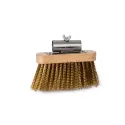
<p>The <a href="https://coeurdefoyer.fr/en/ustensiles-accessoires/1189-brosse-en-laiton-pour-four-a-bois-sans-manche-8004754039400.html"><strong><span style="color: #610c11;">brass brushes</span></strong></a> or steel ones, resistant to high temperatures, remove ash residue without scratching refractory surfaces1.</p>

<p>The <span style="color: #610c11;"><a href="https://coeurdefoyer.fr/en/ustensiles-accessoires/1861-rallonge-pour-kit-de-ramonage-.html" style="color: #610c11;"><strong>chimney sweeping brush</strong></a></span> gives the flues a thorough clean, while the sealed ash bucket prevents accidental spills1.</p>

<p>For demanding users, <span style="color: #610c11;"><a href="https://coeurdefoyer.fr/en/accessoires-pieces/1607-testeur-d-humidite-digital.html" style="color: #610c11;"><strong>digital moisture meters</strong></a></span> give an instant reading of your firewood, essential for efficient combustion and optimal draught.</p>

<p>Finally, <span style="color: #610c11;"><a href="https://coeurdefoyer.fr/en/ustensiles-accessoires/1201-pack-de-trois-ustensiles-avec-manche-de-150-cm.html" style="color: #610c11;"><strong>packs combining a peel, a rake and a brush</strong></a></span> – sometimes on special offer – are an economical way to get the essentials.</p>

<p>These accessories, made from durable materials such as anodised aluminium or Teflon, combine ergonomics and strength, turning every use into a controlled experience</p>

<p><strong>Discover our selection of <a href="https://coeurdefoyer.fr/en/68-ustensiles-accessoires"><span style="color: #610c11;">utensils and accessories for bread ovens, pizza ovens, wood stoves and fireboxes</span></a></strong></p>

<h2>Conclusion</h2>

<p><strong>Do you want to build a bread oven for your own use, but don't know where to start?</strong></p>

<p><strong> Don't panic! </strong></p>

<p>In this article we have explained how to carry out this DIY project, following a few practical tips and simple steps.</p>

<p>You have seen how to choose the location and design of your oven, how to select the right materials, how to build the dome and baking chamber, how to insulate and finish your oven, and how to use and maintain it.</p>

<p>You now have all the keys in hand to embark on this adventure, and enjoy the pleasure of making your own wood-fired bread.</p>

<p><strong>Don't hesitate any longer: building a bread oven is not that complicated, and it can bring you many benefits.</strong></p>

<p><strong>For more information, please <a href="https://coeurdefoyer.fr/en/contact-us"><span style="color: #610c11;">contact us</span></a>.</strong></p>

<h2>FAQ</h2>

<h3>What materials should you use for a bread oven?</h3>

<p>To build a bread oven, it is essential to choose materials that withstand heat, moisture and impact. <strong>Refractory materials are particularly suitable.</strong> Here are a few options:</p>

<ul>

<li><strong>Refractory materials:</strong> firebricks, refractory cement, hydraulic lime.</li>

<li><strong>Raw earth:</strong> fireclay, terracotta.</li>

<li><strong>Natural insulation:</strong> rock wool, vermiculite, straw, sand.</li>

<li><strong>Other materials:</strong> ceramic fibre, wood for the structure, metal for the door and finishes.</li>

</ul>

<p><strong>Browse our catalogue of <a href="https://coeurdefoyer.fr/en/53-produits-materiaux-refractaires"><span style="color: #610c11;">high-temperature refractory materials and products</span></a></strong></p>

<ol></ol>

<h3>What are the steps in building a bread oven?</h3>

<p><strong>Building a bread oven takes place in several stages:</strong></p>

<ol>

<li data-start="991" data-end="1107"><strong data-start="994" data-end="1013">Prepare the ground</strong> : Dig a hole and fill it with gravel or sand to ensure good stability.</li>

<li data-start="1108" data-end="1192"><strong data-start="1111" data-end="1131">Create the base</strong> : Pour a reinforced concrete slab to serve as the foundation.</li>

<li data-start="1193" data-end="1287"><strong data-start="1196" data-end="1213">Lay the hearth</strong> : Install firebricks to form the floor of the oven.</li>

<li data-start="1288" data-end="1414"><strong data-start="1291" data-end="1314">Build the vault</strong> : Build the dome using firebricks and a former to hold them in place.</li>

<li data-start="1415" data-end="1540"><strong data-start="1418" data-end="1443">Assemble the bricks</strong> : Arrange the bricks, tilting them slightly inwards for stability.</li>

<li data-start="1541" data-end="1627"><strong data-start="1544" data-end="1567">Exterior finish</strong> : Apply a natural render to protect the structure.</li>

</ol>

<h3>How do you bake bread in a bread oven?</h3>

<p><strong>Baking bread in a bread oven is a unique experience that requires a few specific techniques:</strong></p>

<ol>

<li><strong>Heat the oven:</strong> Light a fire with dry wood and let it burn until the oven reaches the desired temperature.</li>

<li><strong>Check the temperature:</strong> Throw a handful of flour onto the oven floor. If it browns in 30 seconds, the oven is ready.</li>

<li><strong>Remove the embers:</strong> Remove the embers and ash with a brush or a rake.</li>

<li><strong>Put the dough in:</strong> Place your bread dough in the oven and close the door.</li>

<li><strong>Baking time:</strong> Bake for around 30 minutes for a loaf.</li>

<li><strong>Check it is done:</strong> Tap the bottom of the loaf to check whether it is baked.</li>

</ol>

<h3>Where should you build a bread oven?</h3>

<p><strong>Choosing the location of your bread oven is crucial to its performance and safety:</strong></p>

<ul>

<li><strong>In the garden:</strong> A practical, safe spot, sheltered from wind and weather.</li>

<li><strong>In the house:</strong> If you have a suitable space, make sure the floor can bear the weight of the oven.</li>

<li><strong>Choosing a location:</strong> Take into account the stability of the ground, proximity to the house and protection from the weather.</li>

<li><strong>Floor able to bear the load:</strong> Make sure the ground is stable and can bear the weight of the oven.</li>

<li><strong>Shelter for the oven:</strong> Protect the oven with a tarpaulin or an awning.</li>

<li><strong>Working space:</strong> Choose a spot with enough room to work comfortably.</li>

<li><strong>Stable base:</strong> Make sure the base is stable and secure.</li>

</ul>

<h3>What types of bread oven are there?</h3>

<p><strong>There are several types of bread oven, each with its own characteristics and advantages:</strong></p>

<ul>

<li><strong>Wood-fired oven:</strong> Uses wood as fuel to heat the oven.</li>

<li><strong>Pizza oven:</strong> Specially designed for baking pizzas, often smaller and more compact.</li>

<li><strong>Bread oven:</strong> Designed specifically for baking bread, with a suitable shape and size.</li>

<li><strong>Cast iron oven:</strong> Easy to install and extremely easy to maintain</li>

<li><strong>Traditional oven:</strong> Built with traditional materials such as brick and terracotta.</li>

<li><strong>Earth oven:</strong> Uses raw earth or fireclay.</li>

<li><strong>Brick oven:</strong> Built mainly from firebricks.</li>

<li><strong>Barrel oven:</strong> Uses a metal barrel as its basic structure.</li>

<li><strong>Cooking oven:</strong> Versatile; can be used to cook a variety of foods.</li>

<li><strong>Professional oven:</strong> Designed for intensive use, often larger and more robust.</li>

</ul>

<p><strong>Discover our catalogue of</strong> <span style="color: #610c11;"><a href="https://coeurdefoyer.fr/en/44-fours-a-bois" style="color: #610c11;"><strong>wood-fired ovens, bread ovens and pizza ovens, in kit form and ready to use</strong></a></span></p>

<h3>Which mortar for building a bread oven?</h3>

<p><strong>For building a bread oven, it is essential to use a mortar that withstands heat and provides good thermal insulation.</strong></p>

<p>Refractory mortar is the ideal choice. It is made up of refractory cement, sand and water. This type of mortar can withstand high temperatures without cracking or deforming. Our <a href="https://coeurdefoyer.fr/en/mortiers-colles-refractaires/208-mortier-argile-refractaire-1300-universal-hkm-25-kg.html"><span style="color: #610c11;"><strong>1300 °C refractory clay mortar</strong></span></a> is ready to use for your wood-fired oven, masonry heater or fireplace.</p>

<p>It is also important to use natural materials such as white earth, clay or hydraulic lime to ensure good adhesion and better heat resistance.</p>

<p><strong>Browse our catalogue of <a href="https://coeurdefoyer.fr/en/53-produits-materiaux-refractaires"><span style="color: #610c11;">high-temperature refractory materials and products</span></a></strong></p>

<h3>What size should a bread oven be?</h3>

<p><strong>The size of your bread oven depends on several factors, in particular how much bread you want to bake and how often you will use it.</strong></p>

<p>For domestic use, an oven with an inside diameter of 80 to 100 cm is generally sufficient.</p>

<p>However, if you plan to bake large quantities of bread or use the oven frequently, you can opt for a larger oven.</p>

<p>The height of the vault is also important. A height of 40 to 50 cm is ideal to allow good heat circulation and even baking.</p>

<h3>Which wood should you use to fire a bread oven?</h3>

<p><strong>The choice of wood is crucial to the proper operation of your bread oven.</strong></p>

<p>It is recommended to use dry, good-quality wood, preferably hardwood such as oak, beech or ash.</p>

<p>These types of wood burn slowly and produce a steady heat, ideal for baking bread.</p>

<p>Avoid resinous woods such as pine or spruce, as they can give off resins that alter the taste of the bread and foul the oven.</p>

<h3>Which lime for a bread oven?</h3>

<p><strong>For building a bread oven, it is best to use natural hydraulic lime (NHL 3.5).</strong></p>

<p>This lime is heat-resistant and ensures good adhesion and better heat resistance.</p>

<p>It is also more environmentally friendly and better suited to masonry work involving high temperatures.</p>

<p>Natural hydraulic lime is ideal for renders and joints, ensuring good thermal insulation and better durability of the oven.</p>

<h3>Can you use ordinary cement for a bread oven?</h3>

<p>It is not recommended to use ordinary cement to build a bread oven.</p>

<p>Ordinary cement does not withstand high temperatures and can crack or deform under the effect of heat.</p>

<p>It is better to use refractory cement, specially designed to withstand temperatures above 1000°C.</p>

<p>Refractory cement ensures better durability and better oven performance, guaranteeing even, quality baking.</p>

<p><strong>You will find mortars, castables and grog in our section <a href="https://coeurdefoyer.fr/en/53-produits-materiaux-refractaires"><span style="color: #610c11;">high-temperature refractory materials and products</span></a></strong></p>

<h3>What is the best base for a bread oven?</h3>

<p>The best base for a bread oven is a reinforced concrete slab.</p>

<p>This base provides optimum stability and strength, able to bear the weight of the oven and the high temperatures. It is important to prepare the ground properly by digging a hole and filling it with gravel or sand to ensure good drainage.</p>

<p>The reinforced concrete slab must be reinforced with rebar to guarantee extra strength. Once the slab is laid, let it dry for at least a week before starting to build the oven.</p>

<h3>Which type of oven is best for baking bread?</h3>

<p>The best type of oven for baking bread is the <span style="color: #610c11;"><a href="https://coeurdefoyer.fr/en/44-fours-a-bois" style="color: #610c11;"><strong>direct-fired wood oven</strong></a></span>. This type of oven heats the baking chamber directly with wood, ensuring an even distribution of heat.</p>

<p>Direct-fired wood ovens are ideal for achieving a crisp crust and a soft crumb.</p>

<p>They do, however, require the hearth to be swept after firing to remove embers and ash before the dough pieces go in. Baking is done with the heat stored in the firebricks of the vault and hearth.</p>

<p></p>

<p></p>

<p></p></div>