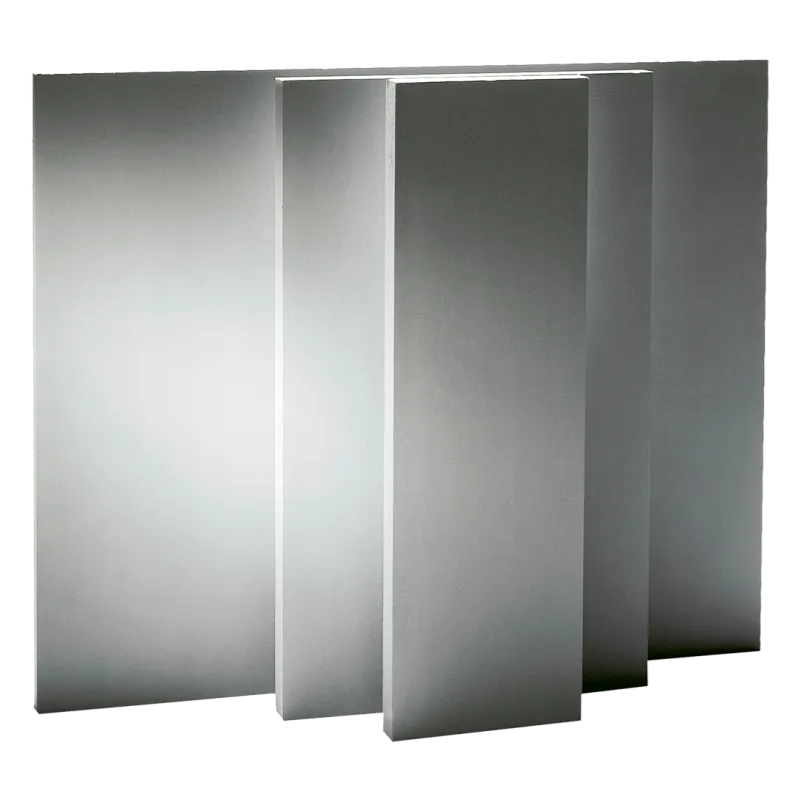
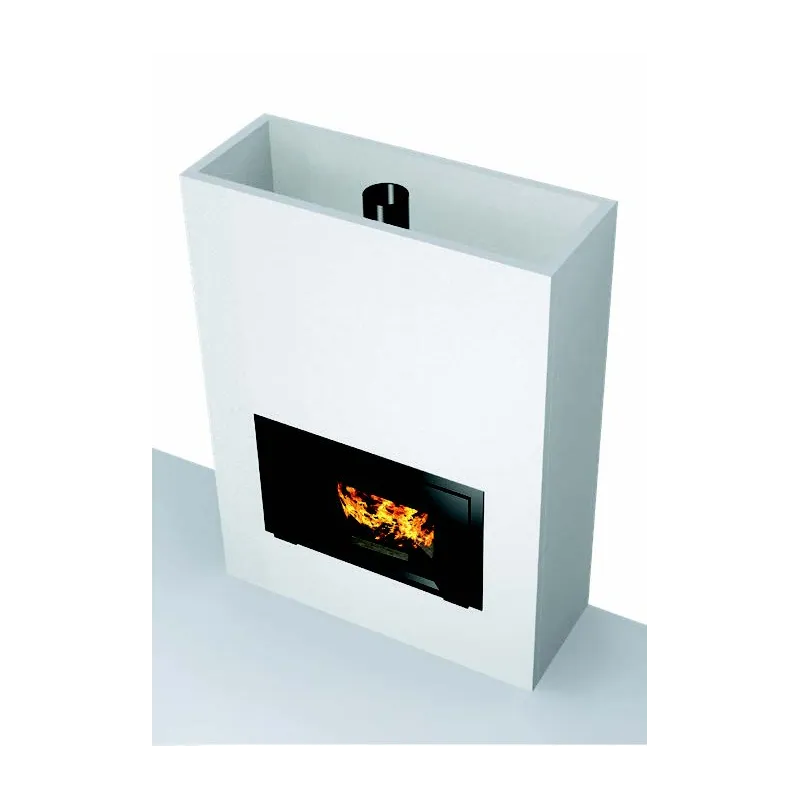
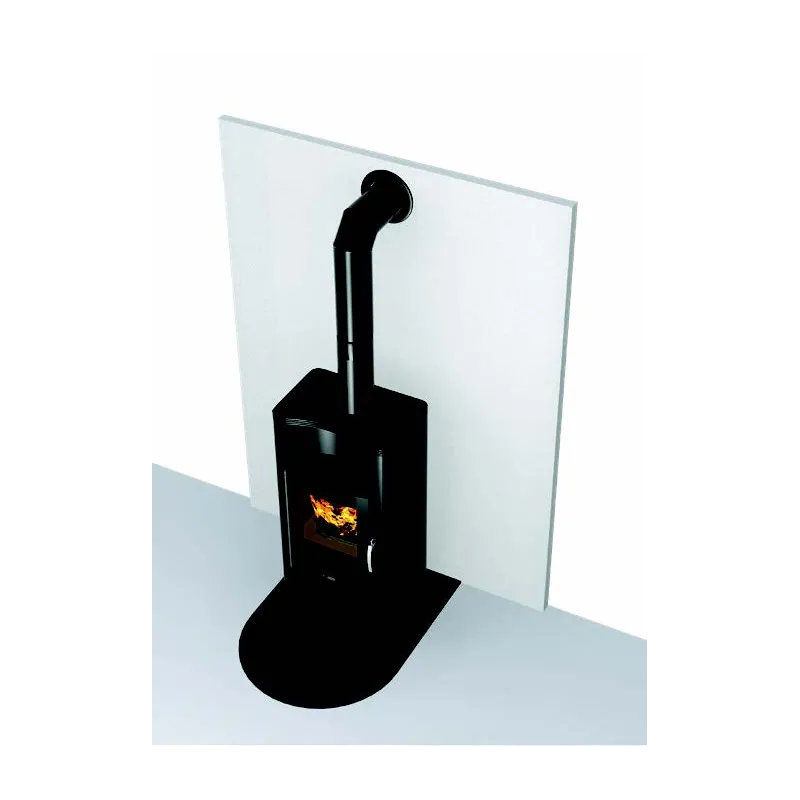
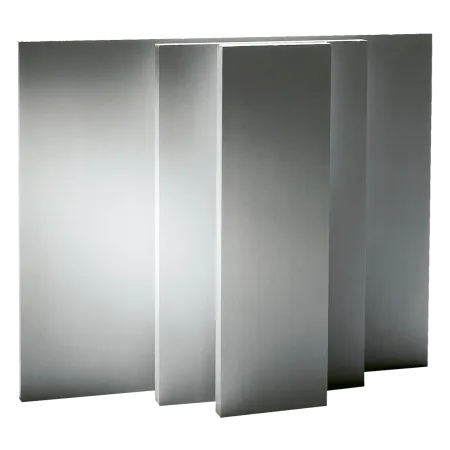
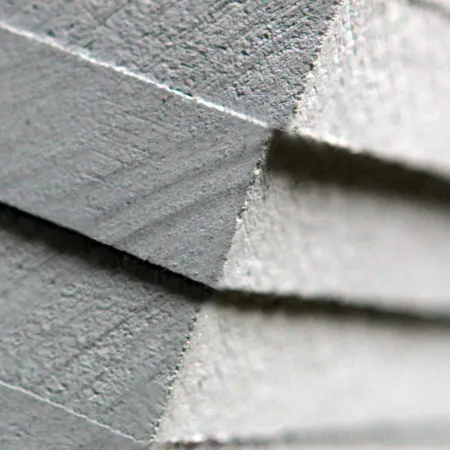
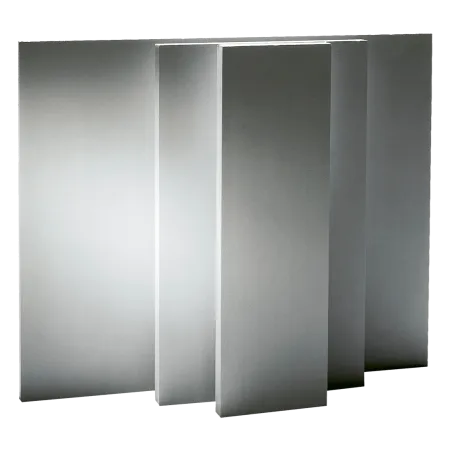
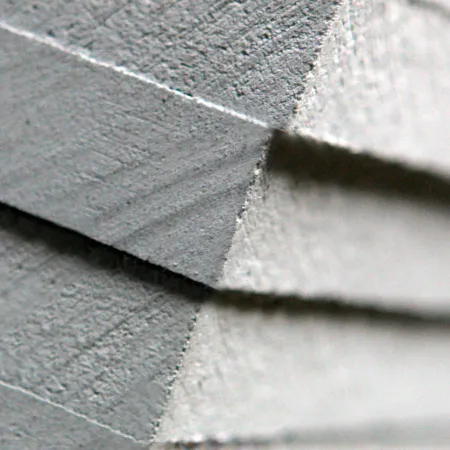
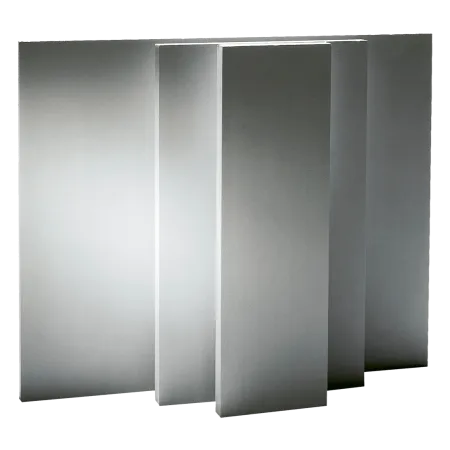
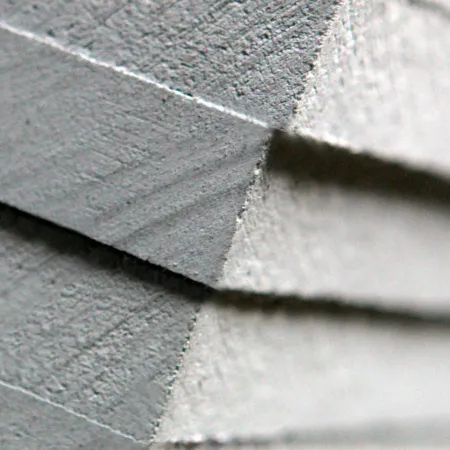
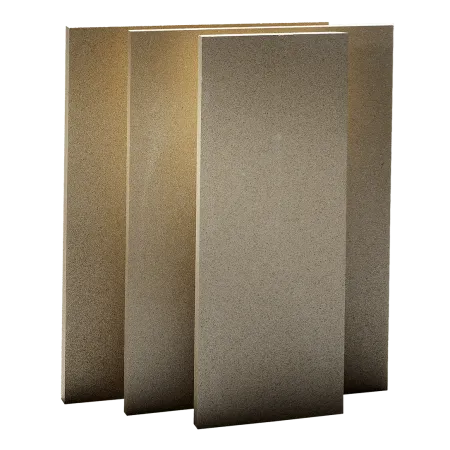
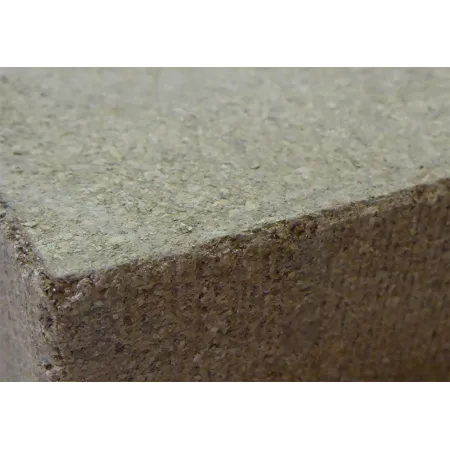
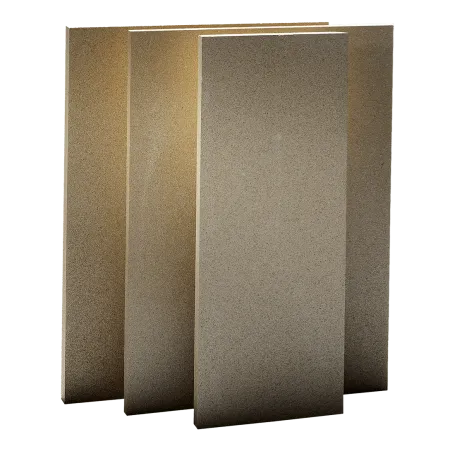
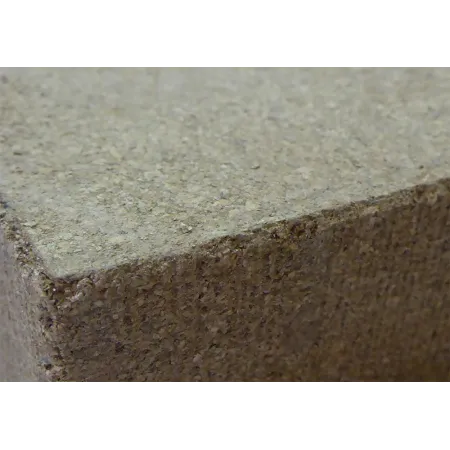
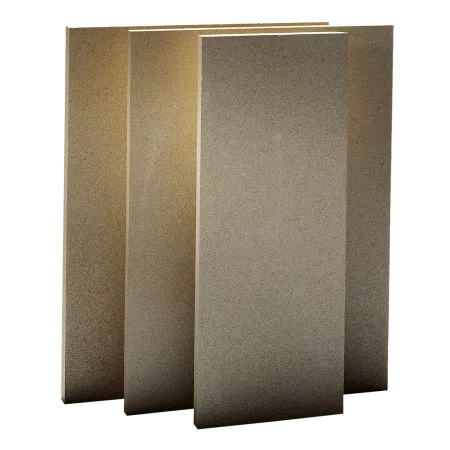
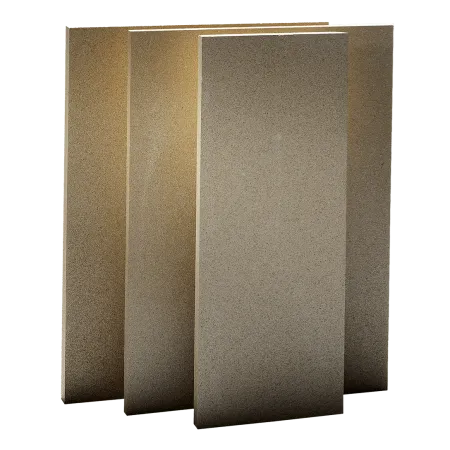
Very light yet very rigid insulating board used as a fire barrier behind fireplaces, wood stoves and pellet stoves: it protects flammable materials such as wood or plasterboard, and is suitable for building insert surrounds, fireplace hoods and so on.
It regulates humidity and has excellent acoustic properties. Easy to cut and install using only woodworking tools.
SOLD BY THE PALLET ONLY! Delivered by articulated lorry; the customer must provide the equipment needed for unloading.
Calcium silicate boards are more than just insulation: used as fire protection, they are both very light and very rigid and suited to fireplace construction. They are available in 2 thicknesses: 30 and 50 mm (other thicknesses on request).
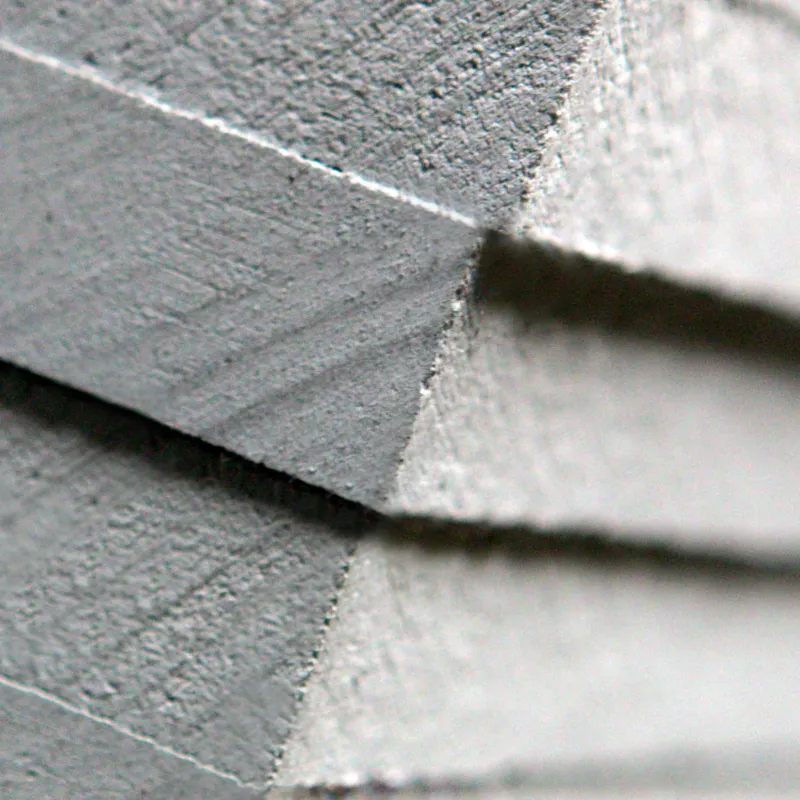
Produced by pressing, calcium silicate boards have exceptional crushing strength. However, if the material is stressed beyond these characteristics, there is no deformation or sagging, but the material breaks.
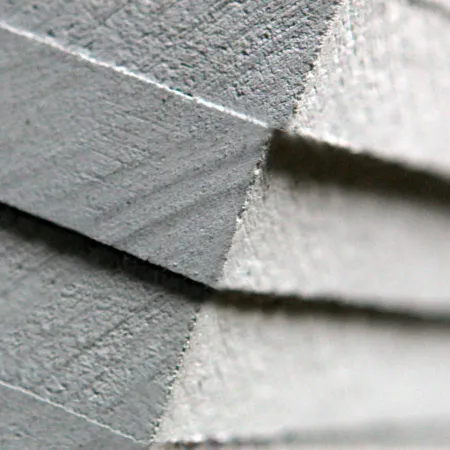
The boards are dust-free, rigid, smooth and easy to install. Their light weight and composition mean they can be used without a metal frame, which avoids any damage caused by the difference in expansion between materials. Calcium silicate is self-supporting and withstands high temperatures, but must never be exposed to fire or flames.
Fields of application:
- Insert surrounds
- Building fireplace hoods
- Insulating the wall behind wood stoves, pellet stoves, etc.
- Acoustic insulation of walls, ceilings and floors
- Heat shield, fire protection
- Insulating wood-fired oven hearths
Product advantages:
- Total protection against fire
- Reduced heat loss
- Extremely lightweight construction
- Ecological building product
- Physiologically harmless
- No odour emissions
- Easy machining and installation with woodworking tools
- No odour emissions
- Masonry lining and thermal insulation in a single material
- Easy machining and installation with woodworking tools
- Space saving thanks to thinner insulation
Installation instructions:
The installation of calcium silicate depends on the existing substrate and its use.
When insulating the wall behind a wood-burning heating appliance:
If the wall to be insulated is combustible (plasterboard, wood, etc.), it is essential to have an air gap between the existing wall and the silicate board.
To do this, simply make a "frame" of calcium silicate at least 3 cm thick, screwed and glued to the existing wall. The silicate boards are then glued / screwed onto this frame (taking care that the screws used do not protrude into the existing wall), leaving a gap of a few centimetres at the top and/or bottom (between board and floor and/or between board and ceiling) to allow air to circulate. Use fully threaded wood screws.
If the wall to be insulated is not combustible (brick, stone, etc.), the air gap is not essential, and in this case the boards can be glued directly onto the existing substrate if it is reasonably flat.
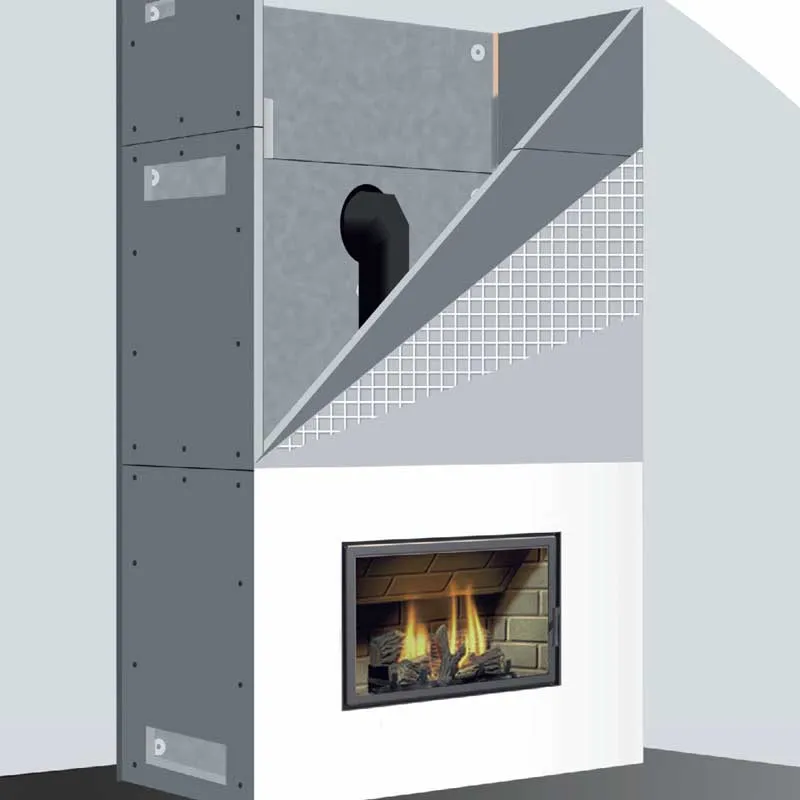
When fitting a fireplace hood or the complete surround of an insert:
The rules are the same as above, depending on the nature of the existing wall.
To build an insert surround, a few rules must be followed, such as creating a decompression box at the top and fitting a ventilation grille to ensure hot air circulation.
We advise you to watch the video below before starting work:
General rules to follow:
- The existing substrate must be flat to avoid any deformation that could lead to breakage.
- Before gluing the boards, the silicate boards must be wetted to saturate the silicate and ensure good adhesion of the glue.
- It is important to use the special silicate adhesive in a cartridge(to glue the boards to each other) or thespecial silicate adhesive in a 20 kg bag (to glue them over their whole surface, using a tiling comb for example).
- A distance of 10 cm must be kept between the stove and the silicate.
For finishing calcium silicate boards:
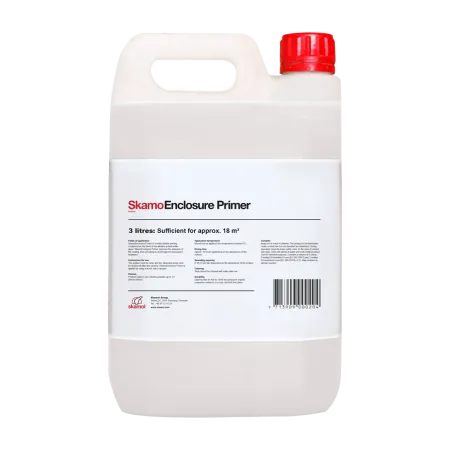
- The boards can be covered with a thin render: in this case, thespecial silicate primer with a roller to prepare the product.
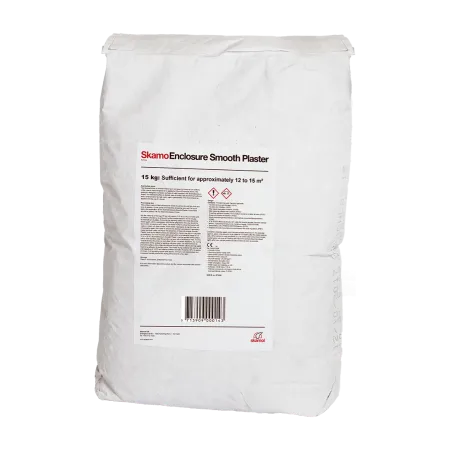
- It is essential to use thespecial silicate render: it is often advisable to apply a first coat to smooth out all imperfections and a second, very thin coat that can be pigmented (the render is white).
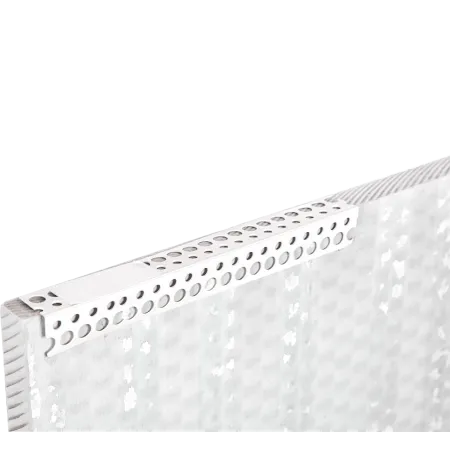
- The joints between boards can be filled with the special silicate adhesive or by applying paper tape. The corners can be protected with composite corner beads.
- The boards can also be covered with facing or stone using the special silicate adhesive in a 20 kg bag.