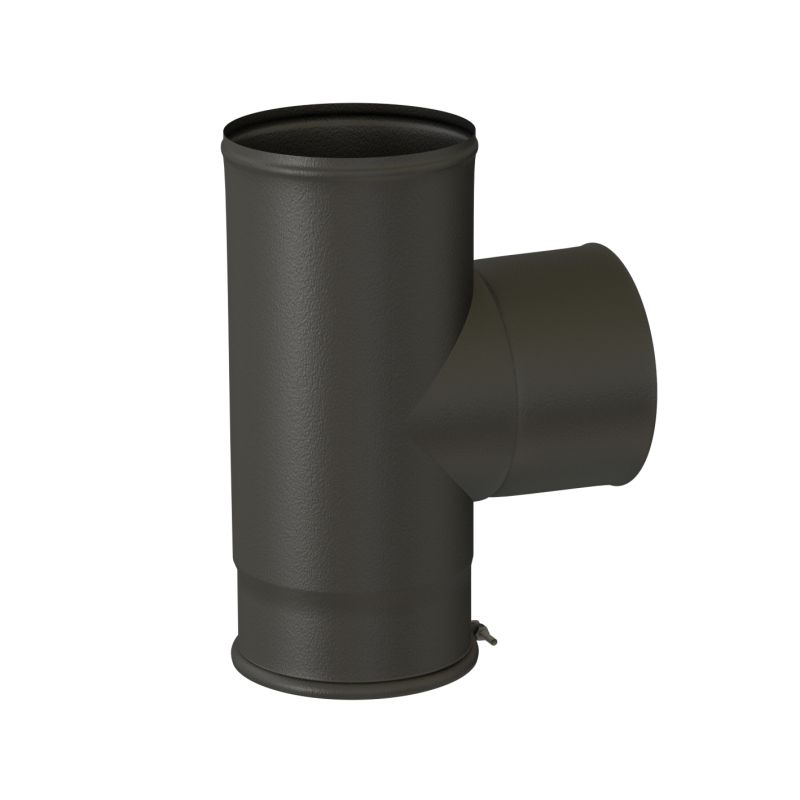
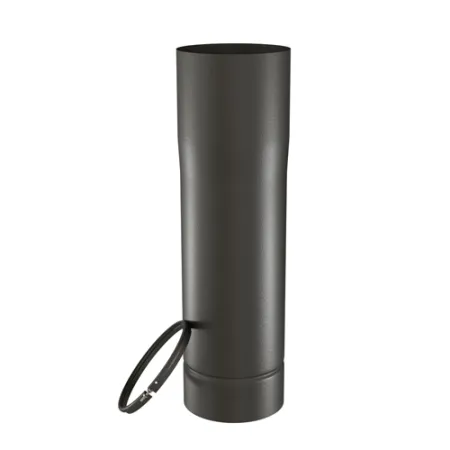
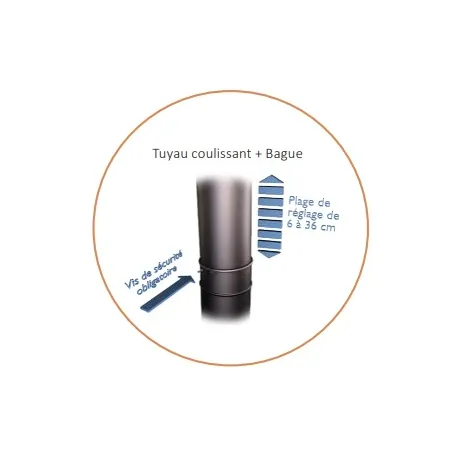
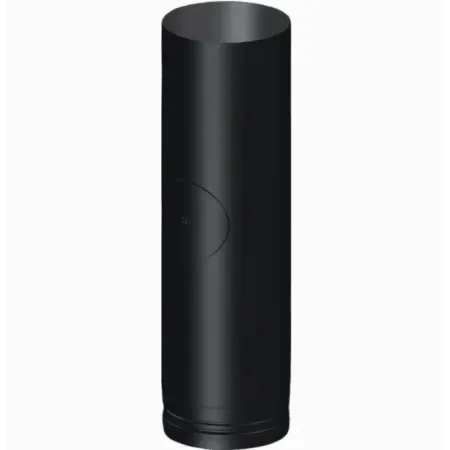
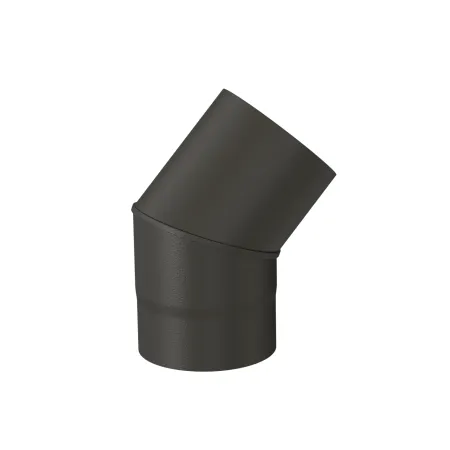
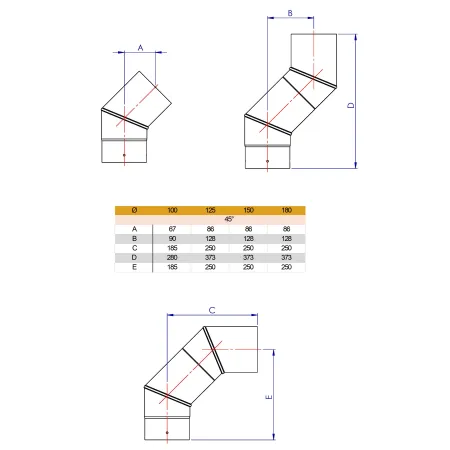
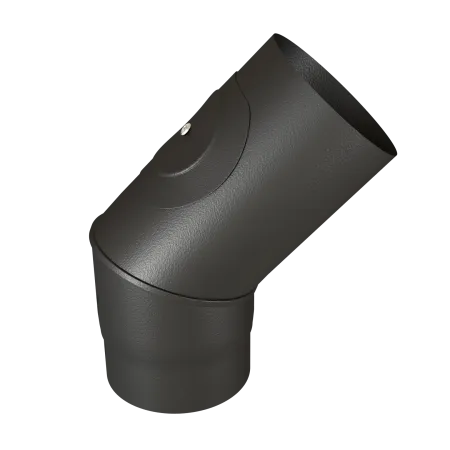
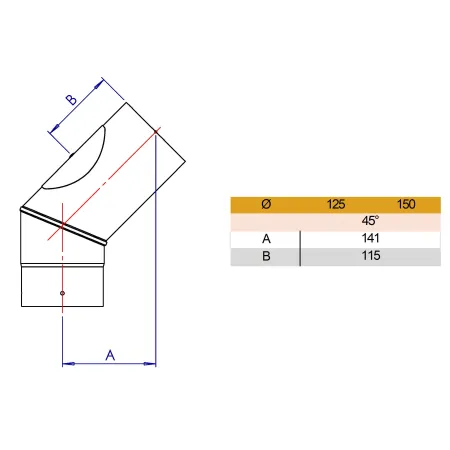
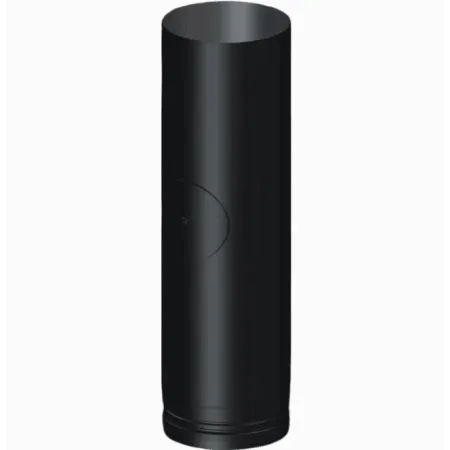
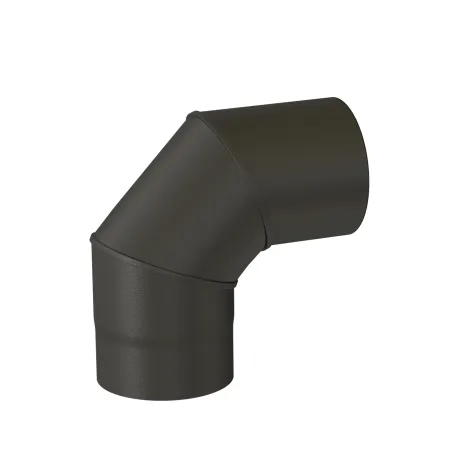
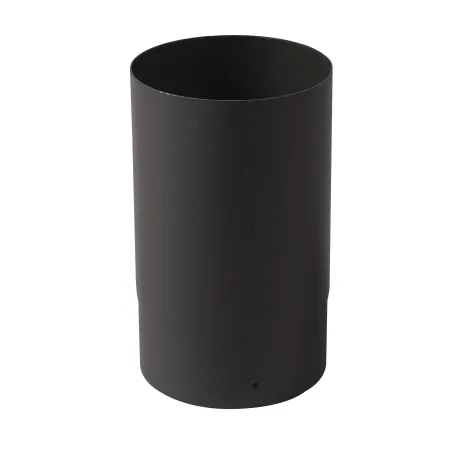
90° double-socket tee with cap in 1 mm enamelled steel, allowing the appliance flue pipe to be connected simultaneously to the chimney flue (vertical) and to another pipe (horizontal). Available only with male branch (horizontal part) and in diameters 100, 125, 150 and 180 mm.
👉 The 90° tee in 1 mm black enamelled steel with male branch neatly connects the wood-burning appliance to the chimney flue (vertically) and to a second pipe (horizontally). Fitted with a removable cap at the bottom, it allows condensates to drain away and gives access for sweeping. Its 60 mm Male/Female socket is perfectly smooth and gives a flawless finish.
🔥As a reminder, flue pipes must be installed in the direction of the condensates, i.e. male end downwards.
➡️ Made in France by TEN, the flue specialist for over 70 years, the pipe is in 1 mm thick enamelled steel, continuously welded, guaranteeing strength and high resistance to acids, high temperatures and scratches.
What is enamelled steel? Enamel is a glass made from a mixture of mineral materials (silica, quartz...) melted at 1200° C and ground, then applied to the steel and fused by firing at 840° C.
What are the advantages of Ten enamelled steel? ✅ Colour stability under heat ✅ Acid resistance ✅ Strength ✅ Resistance to scratches, abrasion, impacts and wear ✅ Holds neither bacteria nor odours ✅ Clean, durable and attractive material
⚠️ Reminder of the safety distances according to the NF DTU 24.1 standard: The safety distance to be kept between a single-wall connecting flue pipe and a combustible material (plasterboard, panelling, PVC, OSB, etc.) is 3 times the nominal diameter of the pipe, with a minimum of 37.5 cm. However, this distance can be reduced to 1.5 times the diameter of the pipe (with a minimum of 20 cm) by using insulation such as calcium silicate boards (fitted with an air gap) or wall protection boards with built-in insulation.