


Masonry heater: the complete guide to construction and maintenance
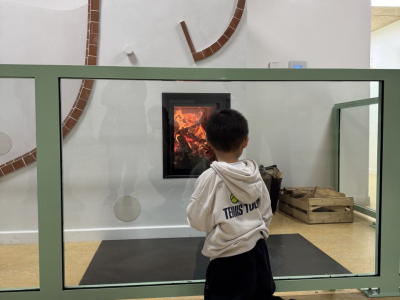
A masonry heater, or masonry fireplace, is a primary heating appliance

Looking for an ecological, economical way to heat your home?
You've heard of masonry heaters, but you don't know how they work or how to build one?
You're in the right place!
The masonry heater is THE ideal solution!
These heating appliances use heat stored in stone or brick to give off gentle, steady warmth for hours.
In this article, we'll explain everything you need to know about masonry heaters.
We'll cover:
- the ecological and economic advantages of the masonry heater
- the basic principles of how it works
- practical advice on building and maintaining your masonry heater.
That way, you can enjoy its benefits to the full.
How to build a masonry heater?
Building a masonry heater is not a task to be taken lightly.
Certain steps and precautions must be followed to guarantee the safety and proper operation of your appliance.
Before embarking on a self-build, you need to decide on the location, size, shape and style of your masonry heater.
There are several models of masonry heater, either built in masonry or in kit form. They differ in structure, efficiency, appearance and cost.
You can draw inspiration from existing plans or create your own custom design.
The essential thing is to comply with standard NF EN 15250 which applies to standardised appliances, and standard NF EN 15544 which covers appliances built in situ on the Austrian model, to guarantee a balance between draught, low emissions and efficiency. This is not something to improvise!
Important: This is an indoor construction that requires no permit, except possibly for the chimney flue in a protected heritage area.
Furthermore, to build a masonry heater, you will need heat-resistant materials. Think stone, brick, concrete or even metal.
See our catalogue of High-temperature refractory materials and products
Choice of materials
Selecting the best materials for a masonry heater is a very important step.
Quality materials ensure the construction is durable and performs at its best. They must therefore be chosen with the greatest care.
The recommended types of brick are generally those with good heat resistance and low thermal conductivity.
The quality and high-temperature resistance of firebricks and other refractory materials determine the lifespan of your masonry heater.
Insulating materials such as vermiculite or perlite are also important to avoid losing heat.
Other recommended materials may include refractory castable and heat-resistant mortar .
Bear in mind that it is important to select high-quality materials.
At Coeurdefoyer, we select all our materials with the greatest care to meet requirements for quality, resistance and durability.
If you need advice on choosing materials, don't hesitate to contact us.

Order your 1300°C grade 5 refractory castable - 25 kg bag
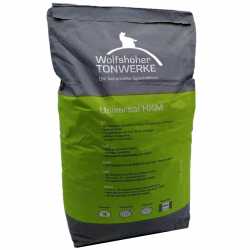
Order your 1300 °C refractory clay mortar - Universal HKM - 25 kg bag
See our catalogue of grog and refractory castables
See our catalogue of mortar and adhesives
Practical tips for optimising the construction and use of your masonry heater
Building a masonry heater calls for a few pieces of advice.
It is important to fully understand how a masonry heater works before starting construction. This is all the more important as the way the device works is relatively complex.
A good grasp of this system is essential to anticipate any problems that may arise during construction.
Furthermore, you must make sure the heater is correctly sized for the space it has to heat. A heater that is too small will not be able to heat the space adequately.
On the other hand, a firebox that is too large burns more fuel than necessary, which can be costly and less ecological.
Sizing a masonry heater depends on several factors.
These include:
- the size of the space to be heated
- the insulation of the room
- the local climate
- the type of fuel used.
For example, a well-insulated room will need a smaller heater than a poorly insulated room of the same size.
It is also important to take the layout of the space into account.
A masonry heater heats mainly by radiation. It is therefore best placed in an area where the heat can spread freely.
Finally, regular maintenance of the heater is essential to maintain its efficiency and extend its lifespan.
At Coeurdefoyer, we can calculate the heat output you need and size your masonry heater.
To find out more, contact us.
Advice on self-building a masonry heater
Building your own masonry heater can be a rewarding undertaking.
It requires careful planning and a clear understanding of the steps involved. It is important to have the necessary tools and to take all appropriate safety precautions.
The process of self-building a masonry heater generally involves several stages:
- designing the heater
- preparing the site
- building the heater
- installing the flue.
Each stage must be carried out with the greatest care to guarantee the safety and efficiency of the masonry heater.
Maintenance and repair
Maintaining and repairing your masonry heater is essential to ensure its longevity.
A regular maintenance routine, including cleaning out the ash and inspecting the joints, can help prevent common problems. Ash builds up over time and can affect the efficiency of your masonry heater.
It is therefore important to clean it out regularly. Make sure the heater has cooled completely before you start cleaning. Use an ash shovel and a metal ash bucket with a lid to remove the ash.
Make sure you dispose of the ash properly once cleaning is finished.
Discover our catalogue of tools, utensils and consumables for building, using and maintaining wood-fired heaters and ovens
As for the joints of the masonry heater, they are essential to keep the appliance airtight.
Over time, these joints can deteriorate, which can lead to heat leaks.
Inspect the joints regularly for any sign of deterioration. If you notice cracks or damage, you must repair them as soon as possible.
If problems arise, such as cracks or damage to the mortar, they must be dealt with quickly.
That way, you avoid more serious damage.
Repairing a masonry heater can often be done by the owner.
But for more complex problems, it may be best to call in a professional.
If you wish to call in a professional, contact Thermasse
Renovating your masonry heater
Renovating your masonry heater can improve both its performance and its appearance.
This may involve adding extra insulation to improve efficiency.
It may also simply come down to repairing or replacing damaged bricks.
Any damaged bricks can affect the efficiency and safety of your heater.
It is therefore important to repair or replace them as soon as possible.
This may involve removing the damaged bricks, cleaning the area, then setting new bricks with refractory mortar.
Furthermore, if you would like your heater to blend in better with your interior décor, you could consider painting it.
You will then need to use heat-resistant paint, or add decorative elements.
Just make sure that any cosmetic change does not affect the heater's function.
Building an ecological masonry heater
You can choose to create an environmentally friendly masonry heater.
To do so, you will need to use sustainable materials and opt for an energy-efficient design.
This may include using recycled bricks or natural materials.
Opting for sustainable materials is a key step in building an ecological masonry heater.
Recycled bricks, for example, are an excellent option. They reduce the need for new materials and so minimise the environmental impact of the construction.
Natural materials such as clay or stone, are also a viable option. They are renewable and have a low carbon footprint.
As for the design of your heater, it should aim to maximise combustion efficiency.
In concrete terms, the heater should be designed to burn the fuel as completely and cleanly as possible. This reduces emissions and environmental impact.
This may involve using advanced combustion techniques or installing a heat recovery system.
A well-designed, well-maintained masonry heater can considerably reduce emissions compared with other forms of heating.
This is due to the efficiency of combustion and to the heater's ability to store and release heat over a long period.
As well as reducing your environmental impact, an ecological masonry heater can help you make significant savings .
Thanks to its energy efficiency, you will use less fuel. This translates into energy and money savings in the long term.
Of course, its efficiency will depend on how well your home is insulated. A well-sized heater in a properly insulated house will give you better comfort and a feeling of warmth while burning less wood.
Building your own masonry heater
Building your own masonry heater is an exciting project for DIY enthusiasts.
It's an opportunity to learn new skills and create something useful and lasting. What's more, it lets you customise a key element of your home.
The first step in building your DIY masonry heater is to familiarise yourself with the basic principles of masonry heater construction. There are many online resources you can use for this.
For example, you can consult detailed guides, video tutorials and discussion forums. On these platforms, you can ask questions and freely share your experiences.
Once you have a good understanding of the basics, you can start planning your project.
This includes:
- designing your heater
- selecting the materials
- preparing the space where the heater will be installed.
Designing your masonry heater is a crucial step. It involves deciding on the heater's size, its shape and the position of the key elements. These include, for example, the combustion chamber and the flue.
You will also need to decide on the type of materials to use for each part of the heater.
Consider drawing a detailed plan of your heater to help you visualise the final project.
At Coeurdefoyer, we support self-builders in carrying out their project.
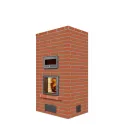
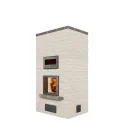
As an example, here is a project carried out by Thermasse covering the design and 3D plans, using CoeurdeFoyer's modular masonry heater products.
Building the heater is a step-by-step process that requires patience and attention to detail.
It is important to follow the instructions carefully and take the time to do things properly.
Finally, don't forget that building a masonry heater is a long-term project.
It will take time for the heater to be fully operational. But with patience and dedication, you can create a masonry heater that will be an efficient and lasting source of heat for your home.
Building your own masonry heater is a rewarding project that can bring you great satisfaction.
With the right resources and a supportive community, you can turn your vision of a masonry heater built with your own hands into reality.
Conclusion - Summary and best practices
Building and maintaining a masonry heater are tasks that require careful planning. They also call for an understanding of the basic principles and a commitment to regular maintenance.
The success of a masonry heater build rests on several key factors.
Selecting the right materials is essential to guarantee the heater's durability and efficiency.
The heater's design must be carefully planned to make sure it is properly sized for the space it has to heat. This also ensures it is positioned optimally for effective heat distribution.
Regular maintenance of the masonry heater is just as important as its construction. This includes regularly cleaning out the ash, inspecting the joints and promptly repairing any damage. Regular maintenance will above all guarantee optimal performance from your appliance. But it will also extend the lifespan of your masonry heater.
Building a masonry heater is a long-term project that takes time and patience. But with the right resources and a supportive community, you will succeed with your project.
In short, whether you are an experienced DIYer or an enthusiastic beginner, building and maintaining a masonry heater is a rewarding project that can bring you great satisfaction and improve your living comfort.
FAQ
1. What are the advantages of a masonry heater?
A masonry heater offers several advantages: it works as an efficient primary heating system, giving off gentle , continuous warmth for several hours thanks to its heat storage system. It allows energy savings, since a single fire a day can be enough to heat an entire well-insulated house.
it is ecological, thanks to complete combustion of the firewood, which reduces carbon monoxide emissions. Its durability is another asset, since its firebrick or stone construction gives it a long lifespan.
2. How much does a masonry heater cost?
The price of a masonry heater varies according to several criteria: the size of the firebox, the materials used (stone, raw earth, firebrick), and the construction method (self-build or professional).
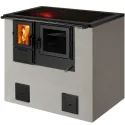
Prices can range from 5,000 to over 25,000 euros, depending on the model and options such as a bread oven or an integrated central heating system. There are more affordable solutions such as the masonry heater kit or the self-build masonry cooker.
3. What types of masonry heater are there?
There are several types of masonry heater, including fully masonry-built models, each with its own particular features:
- The Scandinavian masonry heater, designed to maximise heat release and provide optimal thermal comfort .
- The rocket stove, a more compact model that uses a combustion chamber at high temperature for complete combustion.
- The masonry heater with boiler, which produces hot water for central heating.
- The masonry heater with insert, which offers an attractive, high-performance alternative to the conventional wood stove .
4. How does a masonry heater work?
A masonry heater works by heat storage. A large load of wood is burned quickly in the combustion chamber at high temperature, which allows complete combustion of the wood and limits energy losses. The heat is then stored in the mass of the heater (bricks, stone, concrete) before being slowly released as radiant heat. This type of heating is particularly suitable because it avoids sudden temperature swings.
5. What heat output for a masonry heater?
The heat output of a masonry heater depends on several factors:
- the area to be heated
- the insulation of the house
- the type of firebox
- the mass of the heater
In general, a masonry heater releases a low output over a long period, which sets it apart from conventional wood stoves. One fire a day can be enough to maintain a pleasant temperature in an average house. To choose the right output, it is advisable to take into account the amount of wood needed and the energy efficiency of the heater.
At Coeurdefoyer, we can calculate the heat output you need and size your masonry heater. To find out more, contact us.
6. What type of wood should you use in a masonry heater?
For optimal wood heating, it is recommended to use dry wood with a moisture content below 20%. Dense woods such as oak, beech or hornbeam are ideal, as they give more efficient wood combustion and produce more heat.
Avoid softwoods, which foul the inside of the heater and the flues more quickly.
7. How long does a masonry heater last?
A well-maintained masonry heater can have a lifespan of several decades, thanks to its durability and its robust design.
8. What is the difference between a masonry heater and a conventional wood stove?
A masonry heater stores heat and releases it slowly as radiant heat, whereas a wood stove mainly gives off hot air and heats up quickly, but for less time.
A masonry heater is more efficient in the long run and uses less wood.
9. Can a masonry heater be integrated into a renovation?
Yes, but installation may require structural adjustments because of the heater's weight. It is essential to check that the floor can bear the mass of the heater, especially in an older house.
If you would like to integrate a masonry heater into your renovation project, please contact Thermasse - Designer of made-to-measure masonry heaters who can support you in carrying out your project.
Share this content